For many years, CPUs and GPUs got by with just using a smidge of power. It's a very different story these days, and the AI boom has forced processor designs to consume vast amounts of power. To help shift all this heat away, some companies are creating such complex-looking thermal solutions that they could easily pass off as works of art.
One such example is for Nvidia's H100 AI superchip (via ), but what sets this apart from the crowd is how it's made. Most cold plates, aka water blocks, are milled from several billets of metal that get bolted together to create a chamber. Alloy Enterprises teamed up with to use the latter's modelling software to make something so intricate that milling or casting it would be impossible.


Nvidia's is a 700 W GPU, where the G stands for 'AI training, inference, and large-scale data processing' rather than graphics. That's a fair amount of power, of course, though the common-or-garden isn't too far behind at 575 W. As things currently stand, GPUs are the real powerhouses of the processor world, but it won't be long before CPUs are on par or ahead.
That's according to another king-sized cooler company, Microloops, which gave a presentation (via ) about how it was going to tackle the 4,000 W power consumption of future generations of server CPUs. And we're not talking 50 years into the future or anything like that; Microloops anticipates such power levels by 2034.
AMD's , a 192-core Zen 5c processor, can use up to 500 W of power, but reports that the company will be targeting double that figure for its next generation of massively-cored CPUs. Air cooling just isn't good enough for such things, so the order books of Microloops, Alloy Enterprises, and many others are likely to be packed full thanks to AI systems builders looking to maximise the efficiency of their water-cooled h25 com เข้าสู่ระบบ thermal solutions.
https://t.co/pCneHTI1zh pic.twitter.com/QyaQ0YOJUI
However, I wouldn't be surprised if we start to see similar projects kicking off for gaming PCs. I don't mean OEM builds; it will be the ultra-enthusiasts and overclockers who are happy to BIOS mod their RTX 5090s to use 750 W or higher. But eventually, what's successful at the niche end of things often finds a way to trickle down to the general consumer.
Vapour chambers, water-cooling, and even RGB lighting were all once the preserve of the few, but now anyone can spend a bit of cash and throw it into their humble glass-panelled boxes. So who knows, by 2034, we could all have a diffusion-bonding cold plate on our CPUs, and we'll still be here, arguing over who makes the best gyroid infill structures.
👉👈
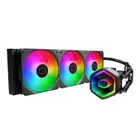
1. Best AIO:
2. Best budget AIO:
3. Best high-end AIO:
4. Best screen:
5. Best air:
6. Best budget air: